Learning Outcomes:
i. Identify the four basic types of animal tissues and their functions.
ii. Classify animals based on their level of tissue organization.
iii. Differentiate between acoelomates, pseudocoelomates, and eucoelomates.
iv. Describe the characteristics of each major animal phylum and their tissue organization.
Introduction:
The diversity of animal life is not only reflected in their external forms and behaviors but also in their internal organization. Animals can be classified based on the presence or absence of tissues, the level of tissue differentiation, and the formation of body cavities.
i. Basic Types of Animal Tissues:
Epithelial Tissue: Epithelial tissue lines the surfaces of organs and internal cavities, providing protection, absorption, and secretion.
Connective Tissue: Connective tissue supports and binds different structures of the body, provides a framework for organs, and stores energy reserves.
Muscle Tissue: Muscle tissue is responsible for movement, enabling animals to contract and relax their bodies for locomotion, digestion, and other functions.
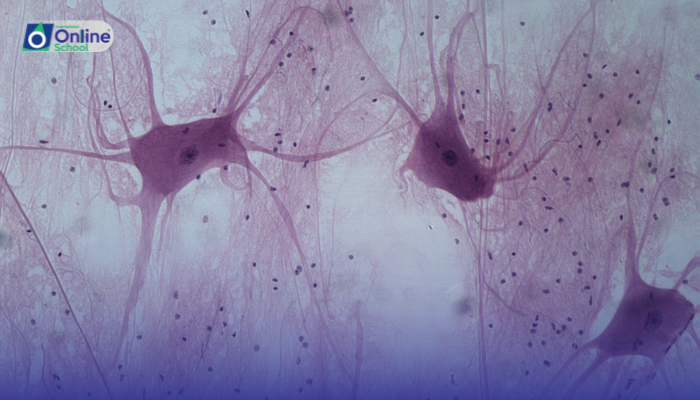
Nervous Tissue: Nervous tissue controls and coordinates the body's activities, transmitting signals throughout the organism.
ii. Levels of Tissue Organization:
Animals can be classified based on their level of tissue organization:
Acoelomates: Acoelomates lack a true coelom, a fluid-filled body cavity between the body wall and the internal organs. Examples include flatworms and sponges.
Pseudocoelomates: Pseudocoelomates have a pseudocoelom, a space between the body wall and the internal organs that is not lined with mesoderm. Examples include roundworms.
Eucoelomates: Eucoelomates possess a true coelom, lined with mesoderm, which provides support and allows for the development of complex organs. Examples include most invertebrates and all vertebrates.
iii. Classification of Animals Based on Tissue Organization:
Diploblastic Animals: Diploblastic animals have two primary germ layers, ectoderm and endoderm, and lack a true coelom. Examples include cnidarians, ctenophores, and flatworms.
Triploblastic Animals: Triploblastic animals have three primary germ layers, ectoderm, endoderm, and mesoderm, and can develop a true coelom. Examples include annelids, mollusks, arthropods, and vertebrates.
Vertebrates: Vertebrates, a subphylum of chordates, possess a notochord, a dorsal support rod, a gill-bearing pharynx at some point in their life cycle, and a true coelom. Examples include fish, amphibians, reptiles, birds, and mammals.
The classification of animals based on tissue organization provides insights into their evolutionary relationships and structural complexity. Understanding the different levels of tissue organization and the characteristic features of each phylum helps us appreciate the diversity and intricate adaptations of the animal kingdom.
